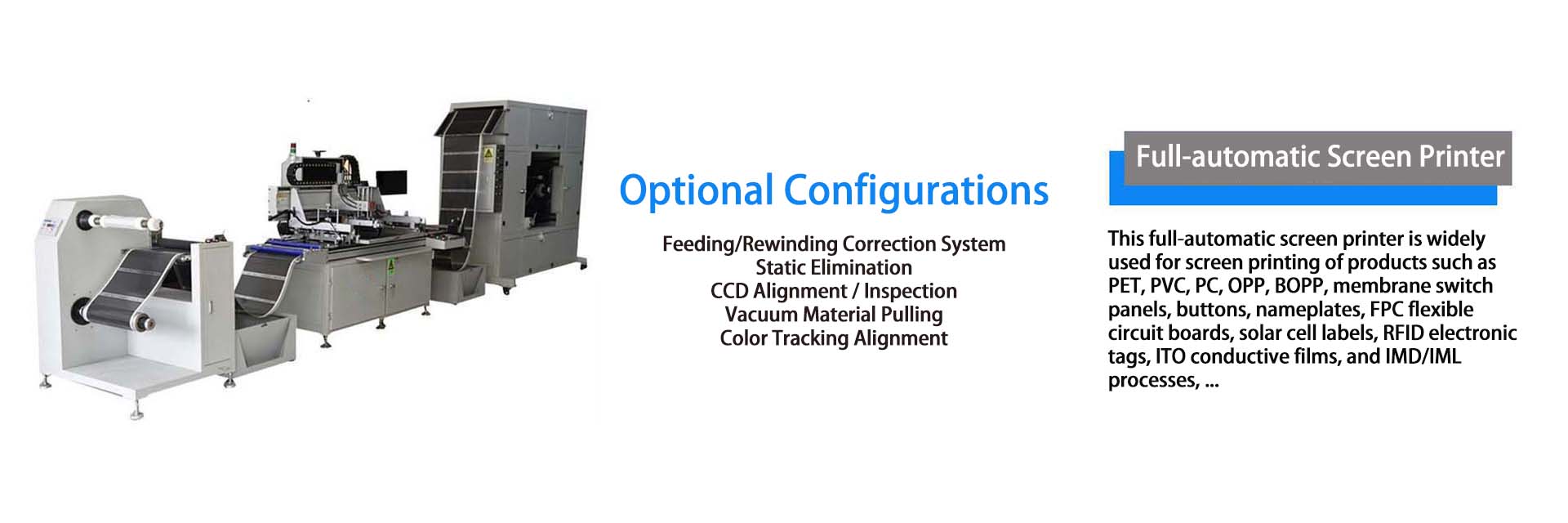
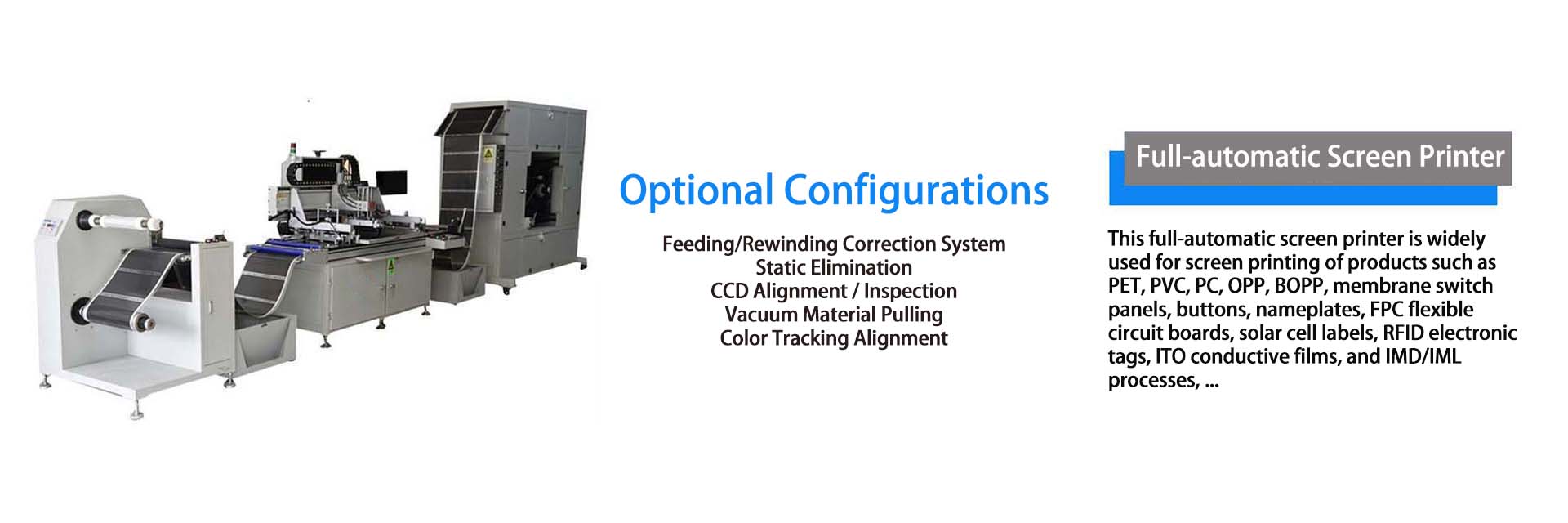
Shield Full-Automatic Screen PrinterElectrothermal Film Production Equipment
SBR Automotive Seat Sensor Screen Printing: Panorama of Market Applications and Future Outlook
Column:Technical News Brand: Hengchuanqi Service Hotline:+86-13352849401
Against the backdrop of the booming automotive industry, safety remains one of the core concerns for consumers. As a key component of automotive safety systems, SBR automotive seat sensor screen printing technology boasts broad market application prospects, profoundly influencing the development pattern of the automotive industry.

I. Market Status of SBR Automotive Seat Sensor Screen Printing
(1) Growing Market Demand Driven by Regulations
Domestically, the gradual implementation of relevant regulations such as JT/T 1094-2016, GB-T 35369-2017, GB/T 24551, and GB 7258 has transformed SBR from an optional device to a standard fitment for front and rear seats of sedans, as well as every seat of trucks and buses. Internationally, EU regulation ECE R16 also mandates SBR as standard equipment. Furthermore, the *C-NCAP Management Rules (2021 Edition)* imposes stricter requirements on SBR, including mandatory front and rear seat fitment and enhanced detection functions, further boosting market demand for SBR automotive seat sensor screen printing products.
(2) Evolution of Market Structure
In the early stage (2014-2015), before IEE was acquired by a state-owned enterprise, it essentially monopolized China’s SBR supply market. However, since 2016, foreign automakers and seat manufacturers have lifted their monopolies, leading to a fragmented market characterized by differentiation in technology (high/low) and pricing (high/low). Traditional SBR products based on PET films now face challenges from new-generation fabric-based SBR products using conductive fabrics, intensifying market competition.
II. Application Fields of SBR Automotive Seat Sensor Screen Printing
(1) Automotive Seat Belt Reminder Systems
As the primary application scenario, automotive seat belt reminder systems use sensor screen printing technology to accurately detect occupant presence on seats. When an occupant fails to fasten the seat belt, the sensor transmits signals to the central control dashboard, triggering a red warning light and an audible alert. This effectively increases seat belt usage rates and reduces casualty risks in traffic accidents.
(2) Airbag Control Systems
SBR automotive seat sensor screen printing technology also plays a key role in airbag control systems. By precisely detecting occupant seating status and classification, the sensor provides critical data for determining airbag deployment intensity, enabling more effective protection for different types of occupants. For example, in child seat sensor (CPOD) applications, it can identify incorrect installation directions of child seats and disable airbag deployment in such cases, significantly enhancing child passenger safety.
(3) Occupant Classification and Vehicle Intelligent Control
With the intelligentization of automobiles, SBR automotive seat sensor screen printing technology is also used in occupant classification (OC) sensors. By identifying occupant seating status and classification, vehicles can achieve smarter controls—such as adjusting seat comfort based on occupant weight, or personalizing in-vehicle environments according to occupant identity—providing more comfortable and convenient experiences for drivers and passengers.
III. Market Prospects of SBR Automotive Seat Sensor Screen Printing
(1) Market Expansion Driven by Technological Innovation
The widespread application of new materials (e.g., conductive fabrics) in SBR automotive seat sensor screen printing technology, coupled with cost reduction and performance improvement through process innovation, has enhanced product competitiveness. Some seat manufacturers have adopted fabric-based SBR in bulk, achieving over RMB 10 million in cost savings via VAVE (Value Analysis and Value Engineering), which will attract more enterprises to invest in SBR R&D and production, further driving market expansion.
(2) Broad International Market Space
Currently, the U.S. regulation FMVSS 208 has not explicitly mandated SBR as standard equipment. However, with the gradual convergence of global automotive safety standards, SBR is highly likely to fully penetrate the U.S. market in the future. This will bring broader international market space for SBR automotive seat sensor screen printing products, driving a new round of industry growth.
SBR automotive seat sensor screen printing technology has achieved remarkable results in market applications and, driven by regulatory mandates and technological innovation, shows an optimistic future outlook. It not only provides solid support for improving automotive safety performance but will also continue to play a key role in the intelligentization and humanization of automobiles, becoming an indispensable force in the development of the automotive industry.


Shenzhen Hengchuanqi Precision Machinery Co., Ltd.
Mobile:+86-13352849401 Email:hcqhe@qq.com
Company Headquarters:Building 3, Maozhouhe Industrial Zone, Shapuwei, Songgang Town, Bao'an District, Shenzhen City, Guangdong Province, China
Dongguan Base:No. 11, Zhenye Street, Lingxia, Liaobu Town, Dongguan City, Guangdong Province, China
WeChat
Mobile Version