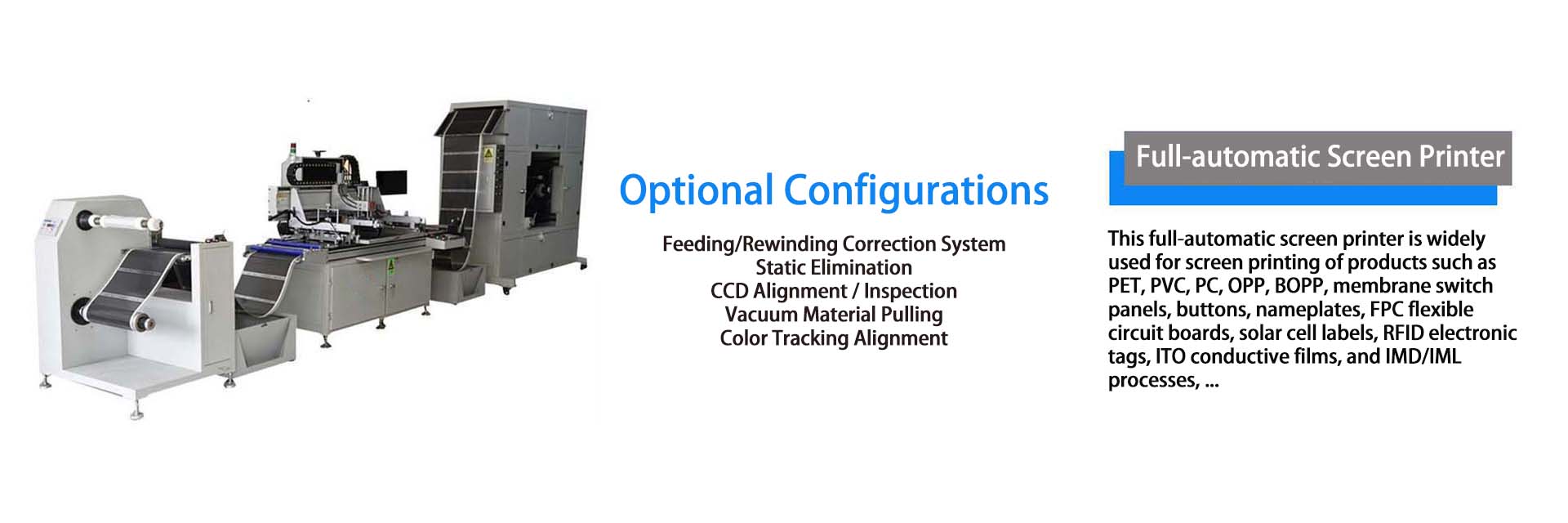
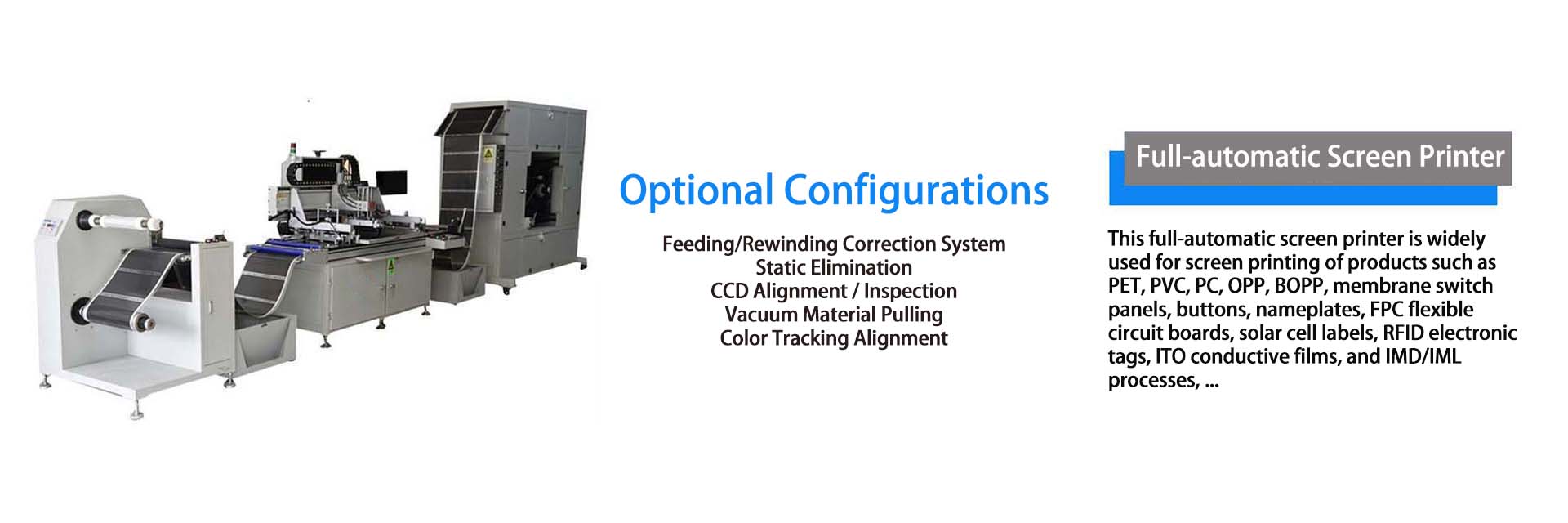
Shield Full-Automatic Screen PrinterElectrothermal Film Production Equipment
What is the screen printing process for membrane switches?
Column:Insights Brand: Hengchuanqi Service Hotline:+86-13352849401
Membrane switches, common electronic components widely used in various electronic devices, are thin films made of conductive materials that realize circuit switching via touch or force application. Screen printing is a common and critical manufacturing method for membrane switches.
The screen printing process for membrane switches begins with preparing a transparent, flat substrate—typically polyester or polyimide film, which offers transparency and flexibility to adapt to devices of varying shapes.
In the screen printing process, a screen stencil (a rectangular metal mesh with fine pores) is first fabricated, considering the specific design of the switch circuit. The stencil is fixed on the printer to ensure printing precision and consistency.
Next, a blocking agent (a special coating) is applied to the stencil to seal some fine pores, allowing ink to pass only through designated areas. Ink is then placed on the stencil, and a squeegee applies pressure and moves to evenly spread the ink across the stencil.
Printer pressure and speed must be properly controlled to ensure ink penetrates the stencil appropriately, transferring the circuit pattern onto the substrate. The ink—either conductive or insulating—depends on the membrane switch’s design requirements.
Subsequently, ink drying and curing are accelerated via methods like baking or UV irradiation, which enhances printing precision/quality and ensures the finished switch’s electrical and mechanical performance.
Finally, post-processing (cutting, assembly, testing) is performed as needed to ensure the membrane switch meets equipment requirements and operates stably.
In summary, the screen printing process for membrane switches is a key manufacturing method enabling precision fabrication of electronic components. It prints circuit patterns onto substrates using stencils and ink, followed by drying and curing, resulting in fully functional membrane switches. This efficient, flexible, and reliable process lays a solid foundation for the development and application of electronic devices.

Shenzhen Hengchuanqi Precision Machinery Co., Ltd.
Mobile:+86-13352849401 Email:hcqhe@qq.com
Company Headquarters:Building 3, Maozhouhe Industrial Zone, Shapuwei, Songgang Town, Bao'an District, Shenzhen City, Guangdong Province, China
Dongguan Base:No. 11, Zhenye Street, Lingxia, Liaobu Town, Dongguan City, Guangdong Province, China
WeChat
Mobile Version