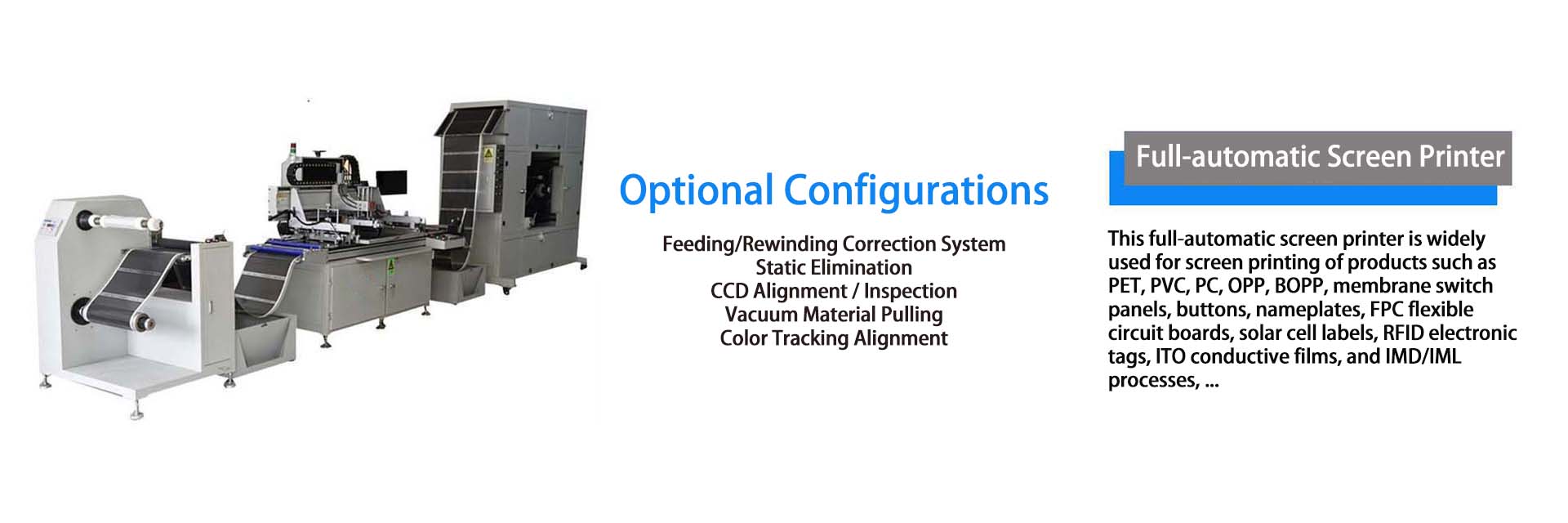
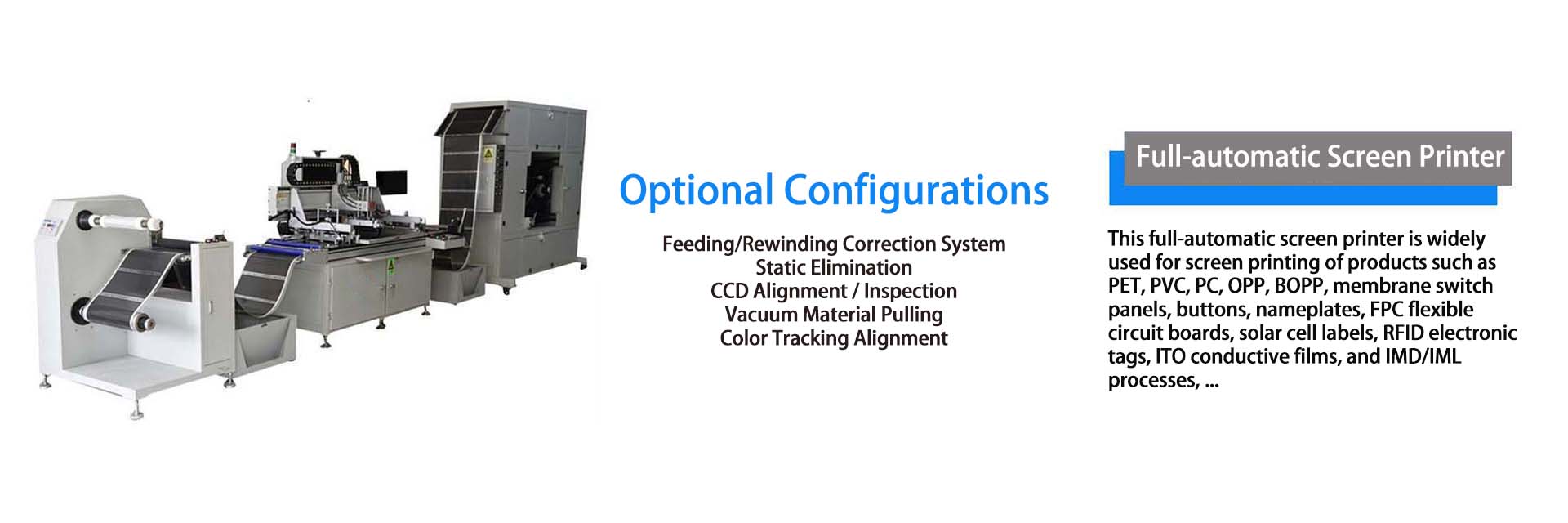
Shield Full-Automatic Screen PrinterElectrothermal Film Production Equipment
[Heat transfer film] Silk screen printing process for shoe and apparel labels
Column:Technical News Brand: Hengchuanqi Service Hotline:+86-13352849401
[Heat transfer film] The production process of heat transfer films for shoe labels includes the following steps, with explanations based on characteristics of different transfer films (e.g., TPU, PET substrates):
1. Substrate & coating preparation
- Substrate selection: PET or TPU films are commonly used as carriers, requiring high temperature resistance (140–180℃) and low tensile deformation.
- Release layer coating: Release agent (e.g., silicone oil coating) is applied on the substrate surface to ensure smooth peeling at high temperatures.
- Printing layer preparation: Patterns are multi-layer printed on the release layer via screen printing, with resolution up to 300dpi for clarity.
2. Adhesive layer treatment
- Adhesive screen printing: Hot-melt adhesive (e.g., TPU adhesive) is screen-printed on the back of the printing layer; formulation is adjusted per shoe materials (leather, synthetic leather, etc.) to ensure bonding strength.
- Drying & curing: The adhesive layer is dried or UV-cured to prevent sticking.
3. Slitting
- Slitting process: Cut into rolls or sheets per shoe label sizes; edges are edge-wrapped to enhance durability.
4. Performance testing
- Peel force test: Verifies bonding strength between transfer film and shoe materials.
- Weather resistance test: Tests pattern durability under high temperature, friction, etc.
5. Storage & packaging
- Moisture/heat protection: Finished products are stored upright in a cool environment to avoid high-temperature deformation.
- Rolled/flat packaging: Packaged per customer requirements, with applicable temperature range marked (e.g., 140–165℃).
Key process parameters
- Temperature control: Hot-pressing temperature adjusted by shoe materials (120–140℃ for leather, 80–100℃ for fabric).
- Pressure & time: Typically 4–6 kg/cm² pressure, 10–15 seconds.
Application examples
- Leather shoe labels: High-viscosity TPU adhesive film used, hot-pressed at 140℃.
- Mesh shoe labels: Low-melting-point adhesive film (80℃) for dot bonding to avoid affecting breathability.
This process adapts to diverse shoe material requirements and achieves firm pattern transfer by optimizing substrates, adhesives, and hot-stamping parameters.

Shenzhen Hengchuanqi Precision Machinery Co., Ltd.
Mobile:+86-13352849401 Email:hcqhe@qq.com
Company Headquarters:Building 3, Maozhouhe Industrial Zone, Shapuwei, Songgang Town, Bao'an District, Shenzhen City, Guangdong Province, China
Dongguan Base:No. 11, Zhenye Street, Lingxia, Liaobu Town, Dongguan City, Guangdong Province, China
WeChat
Mobile Version