Shield Full-Automatic Screen PrinterElectrothermal Film Production Equipment
The working principle of screen printing machines in automated screen printing production lines
Column:Insights Brand: Hengchuanqi Service Hotline:+86-13352849401
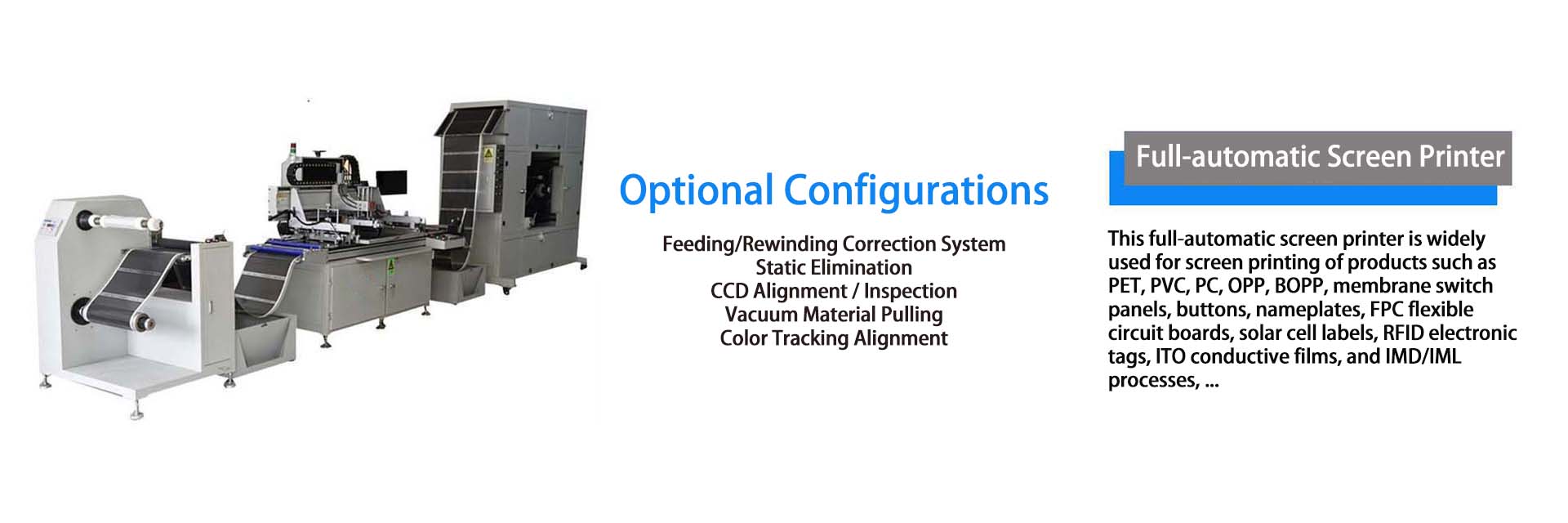
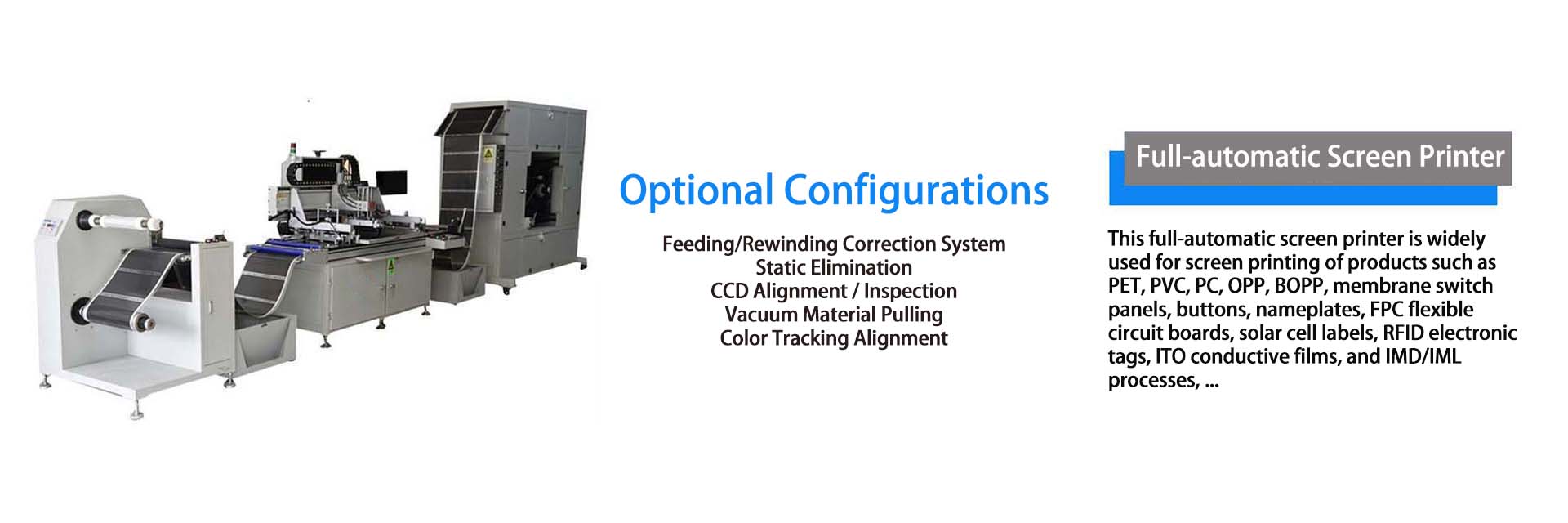
Automatic screen printers are named by their degree of automation. As a development trend following manual and semi-automatic screen printers, they adopt more advanced processes and technologies to enable more precise, faster, and higher-automation screen printing. Currently, fully automatic screen printers are seeing strong growth, with their market share rising rapidly—adopted by many large companies and gradually introduced by small and medium-sized enterprises.
Working principle of automatic screen printers:
Screen printing consists of five key elements: screen plate, squeegee, ink, printing table, and substrate. It operates on the basic principle that mesh openings in the image area of the screen plate allow ink to pass through, while those in non-image areas do not. During printing, ink is poured at one end of the screen plate; the squeegee applies pressure on the inked area and moves toward the other end. Ink is squeezed through the mesh openings of the image area onto the substrate as the squeegee moves.
The ink’s viscosity confines the print to a specific range. Throughout printing, the squeegee maintains line contact with both the screen plate and substrate, with the contact line moving alongside the squeegee. A gap is kept between the screen plate and substrate, so the screen plate’s tension generates a rebound force against the squeegee. This force ensures only moving line contact between the screen plate and substrate (with other areas separated), causing ink to detach from the screen—guaranteeing dimensional accuracy and preventing substrate smearing. After the squeegee traverses the entire plate, it lifts, the screen plate rises, and ink is gently scraped back to the initial position.

Shenzhen Hengchuanqi Precision Machinery Co., Ltd.
Mobile:+86-13352849401 Email:hcqhe@qq.com
Company Headquarters:Building 3, Maozhouhe Industrial Zone, Shapuwei, Songgang Town, Bao'an District, Shenzhen City, Guangdong Province, China
Dongguan Base:No. 11, Zhenye Street, Lingxia, Liaobu Town, Dongguan City, Guangdong Province, China
WeChat
Mobile Version